
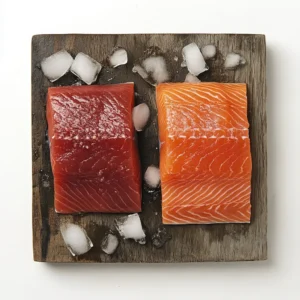
Salmon is one of the most beloved fish worldwide, celebrated for its rich flavor, versatility in the kitchen, and impressive health benefits. Among the various types of salmon, two stand out as favorites: king salmon and sockeye salmon. But when it comes to deciding which is superior, the answer isn’t so straightforward. Both king salmon and sockeye salmon have their unique qualities, from taste and texture to nutritional value and sustainability. In this post, we’ll dive deep into the debate of king salmon vs. sockeye salmon, comparing their flavor profiles, health benefits, environmental impact, and price points. By the end, you’ll have a clearer picture of which salmon might be the best salmon for you.
What is King Salmon?
King salmon, also known as Chinook salmon, is the largest species of Pacific salmon and is often regarded as the most premium variety. Found primarily in the cold waters of the North Pacific, king salmon is prized for its high fat content, which gives it a rich, buttery flavor and a tender, melt-in-your-mouth texture. Its flesh ranges from pale pink to deep red, and it’s a favorite among chefs and seafood enthusiasts for its luxurious taste.
What is Sockeye Salmon?
Sockeye salmon, sometimes called red salmon, is smaller than king salmon but is equally revered for its distinct qualities. Known for its deep red flesh and firm texture, sockeye has a more pronounced, slightly gamey flavor compared to other salmon species. It’s often described as having a robust taste that holds up well in a variety of dishes, from grilling to smoking.
Taste and Texture: King vs. Sockeye
When it comes to taste and texture, the choice between king salmon and sockeye salmon boils down to personal preference.
- King Salmon: If you’re looking for a rich, indulgent experience, king salmon is hard to beat. Its high fat content gives it a buttery texture and a rich flavor that pairs beautifully with simple seasonings or more complex sauces. The texture is soft and flaky, making it ideal for dishes where you want the salmon to be the star of the show.
- Sockeye Salmon: For those who prefer a bolder, more intense flavor, sockeye is the way to go. Its firm flesh holds up well to grilling, roasting, or even being used in salads and pastas. The taste is often described as “clean” and “pure,” with a slight earthiness that sets it apart from milder salmon varieties.
Nutritional Benefits: Which Salmon is Healthier?
Both king and sockeye salmon are nutritional powerhouses, packed with protein, omega-3 fatty acids, and essential vitamins and minerals. However, there are some key differences in their nutrient profiles.
- King Salmon: Thanks to its higher fat content, king salmon boasts more omega-3 fatty acids per serving than sockeye. Omega-3s are crucial for heart health, brain function, and reducing inflammation. King salmon is also a great source of vitamin D, B vitamins, and selenium.
- Sockeye Salmon: While it has less fat than king salmon, sockeye is richer in certain nutrients like vitamin D and astaxanthin, a powerful antioxidant that gives sockeye its vibrant red color. Astaxanthin has been linked to improved skin health, reduced oxidative stress, and enhanced immune function. Sockeye also provides a hearty dose of omega-3s, though slightly less than king salmon.
In terms of calories, king salmon tends to be higher due to its fat content, but both types are excellent choices for a healthy diet. If you’re focused on maximizing omega-3 intake, king salmon might have a slight edge. However, if you’re looking for a leaner option with added antioxidant benefits, sockeye salmon is a fantastic choice.
Sustainability: Making an Eco-Friendly Choice
Sustainability is a critical factor when choosing seafood, and both king and sockeye salmon can be sustainably sourced. However, it’s essential to be mindful of where and how the salmon is caught or farmed.
- Wild-Caught Salmon: Both king and sockeye salmon are primarily wild-caught in the Pacific Ocean, particularly in Alaska, where fisheries are well-managed to prevent overfishing. Look for certifications like the Marine Stewardship Council (MSC) label to ensure your salmon comes from a sustainable source.
- Farmed Salmon: While king salmon is sometimes farmed, sockeye is almost exclusively wild-caught due to the difficulty of farming it. Farmed salmon can be a sustainable option if it comes from responsible farms that prioritize environmental impact, but wild salmon is generally considered the more eco-friendly choice.
When choosing between king and sockeye, both can be sustainable options, but always check for certifications or ask your fishmonger about the sourcing.
Price Comparison: Is King Salmon Worth the Premium?
One of the most noticeable differences between king and sockeye salmon is the price. King salmon is generally more expensive than sockeye, and for good reason.
- King Salmon: Its larger size, higher fat content, and luxurious flavor make it a premium product, often commanding top dollar at fish markets and restaurants. The limited availability of wild king salmon also drives up the salmon pricing.
- Sockeye Salmon: While still considered a high-quality fish, sockeye is more abundant and smaller in size, making it more affordable than king salmon. It’s an excellent option for those who want wild-caught salmon without the premium price tag.
If budget is a concern, sockeye salmon offers great value for its flavor and nutritional benefits. However, if you’re willing to splurge for a special occasion, king salmon’s rich taste and texture might be worth the extra cost.
Which Salmon is Superior?
So, is king salmon or sockeye salmon the superior choice? The answer depends on what you’re looking for.
- Choose King Salmon if: You prefer a rich, buttery flavor and a tender texture. It’s also ideal if you’re seeking a higher omega-3 content and don’t mind paying a bit more for a premium product.
- Choose Sockeye Salmon if: You enjoy a firmer texture and a more pronounced, robust flavor. Sockeye is also a great option if you’re looking for a leaner fish with added antioxidants like astaxanthin, or if you want a more budget-friendly wild-caught salmon.
Ultimately, both king and sockeye salmon are exceptional choices, each with its own strengths. Whether you’re grilling, baking, or pan-searing, you can’t go wrong with either. For the best salmon experience, try both and see which one suits your palate and priorities.
Salmon lovers, the choice is yours! Whether you lean toward the luxurious richness of king salmon or the bold, firm bite of sockeye, both offer incredible flavor and health benefits. Just remember to choose sustainably sourced options to protect our oceans for future generations. Happy eating!